Why Dogs Lick People
Published: 2026. 03. 22. 07:30 -
- Photos: welovedogz.hu • 3 minutes readingPublished: 2026. 03. 22. 07:30 -
- Photos: welovedogz.hu • 3 minutes reading
 Set WeloveDogz to appear first in Google search results!
Many dogs happily lick not only their owners but strangers as well. There is a rather less-than-appetising explanation behind it.

However, before you panic about your pet, let’s make one thing clear: this gesture primarily serves as a form of social interaction and is best understood as a greeting. It’s essentially a social behaviour that comes from their evolutionary history, explains Dr Emily Blackwell, a lecturer in companion animal behaviour and welfare at the University of Bristol.
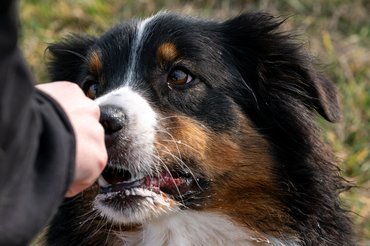
Since we have mentioned evolution, it is worth exploring why licking became a form of greeting. As the expert explains, puppies greet their mother this way, but beyond friendliness, they have a much more important goal: they want food. The mother then provides regurgitated nourishment for them. Yes, that is the less charming part of the explanation. However, this is only relevant in the parent–offspring relationship, so you can interpret your pet’s behaviour simply as affection.
Another interesting aspect of this behaviour is that it is remarkably rare for an adult dog to lick another adult dog. They do not use this greeting among themselves. So why do they behave this way towards humans? According to Dr Blackwell, the explanation is that, as an owner, you permanently occupy the role of a parent in your dog’s eyes. As they point out, this is a form of lifelong puppy-like behaviour in domesticated dogs.
This is also reflected in vocalisation; studies show that the sounds made by adult domesticated dogs resemble those of puppies far more than those of wild canines. This phenomenon is called neoteny, and it can also be observed in other domestic animals, such as cats. In their case, kneading can be interpreted in a similar way.
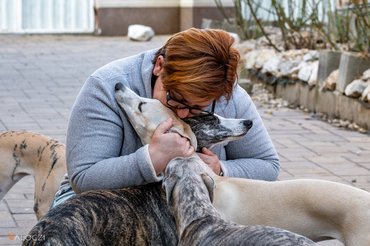
After all this, an important question arises: is it a problem if your pet greets you with a lick? According to the behaviour expert, there is no clear consensus on whether this residual behaviour should be encouraged or discouraged.
As long as you do not have open wounds, a dog’s saliva is unlikely to cause physical harm (unless parasite prevention is neglected, as some parasites can be transmitted to humans). However, if it makes you uncomfortable, you can train your dog out of it.
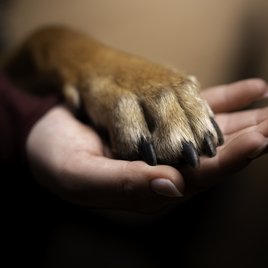
The most important rule is never to scold them for it (even negative attention is still attention), and certainly do not punish them. Instead, prevent the behaviour and offer an alternative. For example, stroke them or ask for a paw while speaking kindly, and you may also reward them. If you are more comfortable receiving a lick on your hand, you can redirect the behaviour from your face to your hand.
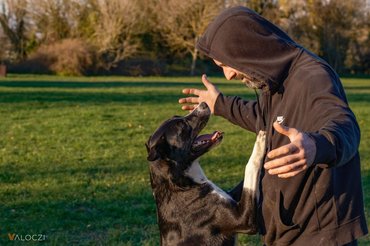
Dr Blackwell also emphasises that owners should not have unrealistic expectations of their dogs. This includes expecting them to tolerate being alone calmly and quietly for long periods. The fact that they view you as a parent clearly shows how important you are in their life. Therefore, it is not reasonable to expect them to cope effortlessly with long separations.
Of course, separation is sometimes unavoidable, for example during working hours, but dogs can be gradually accustomed to it. As we have mentioned, some breeds tolerate solitude better than others, but in general, excessive time alone is not beneficial for any dog. It can lead to various mental and behavioural issues if you cannot dedicate enough time to them.
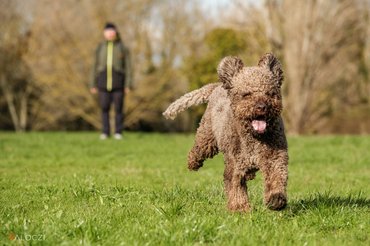
At the same time, it is not healthy if a dog reacts excessively to separation. The condition known as separation anxiety is quite common; dogs affected by it cope very poorly with their owner’s absence, which may result in barking, noise-making, destructive behaviour, or house-training issues. These are not considered normal and, if necessary, should be addressed with the help of a professional.
Follow us!
facebook instagram youtube spotify
Related articles