Why Do Dogs Stretch When They See Us?
Published: 2026. 02. 21. 07:30 -
- Photos: Getty Images Hungary; welovedogz.hu • 4 minutes readingPublished: 2026. 02. 21. 07:30 -
- Photos: Getty Images Hungary; welovedogz.hu • 4 minutes reading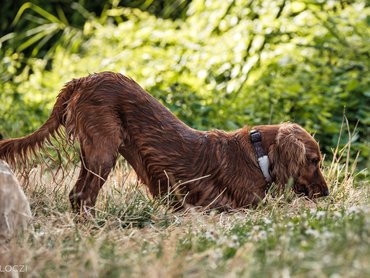
 Set WeloveDogz to appear first in Google search results!
As a dog owner, the situation is probably familiar to you as well: you arrive home after work, your companion runs to the door to greet you – but first they have a good stretch.

Most often, this kind of stretching in dogs is a greeting behaviour, an expression of affection and excitement, not simply about relaxing the body. However, the phenomenon can be a bit more complex than that – we’ll explain why.
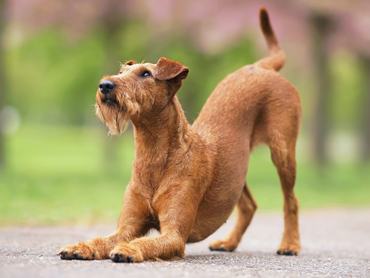
Our companions show their affection towards us in many different ways: they may wag their tail, lick us, or bring us their favourite toy. When your dog greets you by lifting their rear into the air and stretching their front legs forward, they may be expressing several things.
If your dog stretches right when you arrive home, it’s usually more of a greeting behaviour than just a physical stretch. Think of it as the dog version of saying hello or giving a warm welcome
explains certified animal trainer and pet lifestyle expert Nicole Ellis to Rover, adding that our four-legged friends are essentially signalling that they are happy about our return.
This greeting bow is a relaxed, friendly gesture that shows the dog is glad to see you. You will most often encounter it after you have been apart for a while – for example, after you leave home, work in another room, or wake up in the morning.
However, stretching when you get home may have other reasons as well:
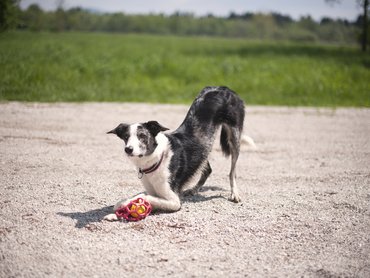
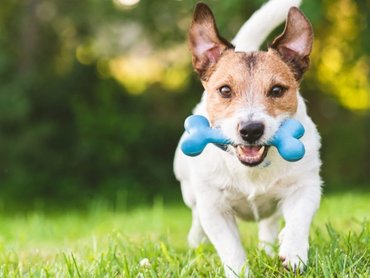
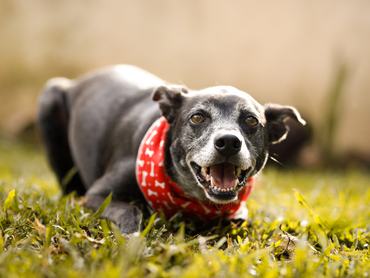
Although a play bow may look similar to a greeting stretch in terms of posture, its purpose is completely different: to initiate interaction through play. Unlike the greeting stretch, it is faster and much more energetic, and is often accompanied by signals such as enthusiastic tail wagging, short barks, an open mouth, upright ears, bright eyes, or running back and forth.
When this happens, join the game if you can. It can be anything interactive: throwing a ball, practising tricks, tugging on a rope toy, and so on.
Frequent large stretches can also be a sign that the joints are affected by what is sometimes called “winter lameness”. And it does not have to be winter according to the calendar, cooler or wetter weather is enough.
During such drops in temperature, blood flow to the joints may decrease from one day to the next. As a result, the joint fluid thickens and becomes sticky instead of maintaining its smooth, honey-like consistency. On top of that, the animal’s joint ligaments may also become tighter, which is not beneficial.
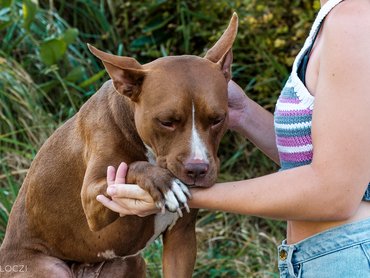
These cold, stiff joints are harder to move, and early warning signs of arthritis may intensify. After the early stage, limping may also appear. Unfortunately, stiff joints are more likely to be injured during play, running or jumping, especially when the animal performs high-intensity movements without warming up first. Injuries such as cruciate ligament tears become more common during the winter months or when the weather suddenly and persistently turns colder after a warmer period.
Follow us!
facebook instagram youtube spotify
Related articles