Trainer Debunked Myths About Choosing a Dog
Published: 2026. 05. 25. 07:30 -
- Photos: welovedogz.hu • 5 minutes readingPublished: 2026. 05. 25. 07:30 -
- Photos: welovedogz.hu • 5 minutes reading
 Set WeloveDogz to appear first in Google search results!
A happy life with a dog does not begin with endless ball throwing. In our article, we highlight how to navigate the world of dogs’ instincts and honest self-reflection so that we can live together harmoniously and truly find a companion for 15 years.

In this article we explore why three hours of daily ball throwing is not enough for a border collie, how a puppy’s true temperament can already be recognised in the litter, and when we make the right decision by turning to shelters instead of breeders.
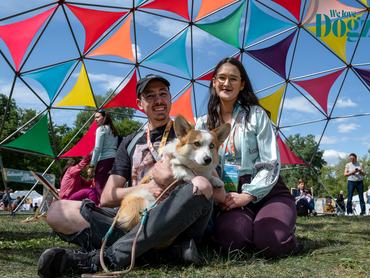
Viktória Vass: Simplified, instinctual drive is the collection of behavioural programmes that a dog does not need to be taught, but naturally brings with them. In a hunting dog, for example, chasing, scent work, or an extreme reaction to moving things may be natural. In a guard dog, meanwhile, controlling strangers or territorial defence. In itself, this is not a problem; in fact, this is why these breeds were created. The difficulty begins when the environment expects something completely different from the dog than what they were genetically optimised for. A dog with strong instinctual drive generally requires more conscious management and greater responsibility in everyday life.
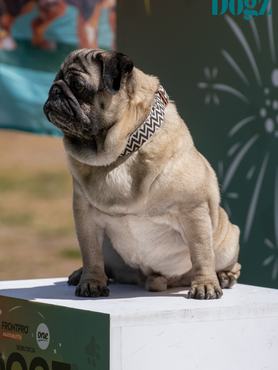
V. V.: Certain things are visible very early, such as stress tolerance, curiosity, nervous system recovery ability, or how much they initiate contact. Temperament tests do exist, and when used properly they can be very useful, but in my opinion they are not predictions in themselves, but snapshots. A puppy’s behaviour must always be viewed together with genetics, breeding background, the mother’s nervous system, and early environmental effects. This is exactly why we are now working on the kölyökteszt.hu project as well: so that choosing a dog is not based on intuition or “which one comes up to me”, but happens in a more structured and professionally grounded way.
V. V.: There are breeds that are generally more tolerant, cooperative, and less sensitive in certain situations, but in my opinion there is no such thing as a “child-proof” dog; at most, one can be made. Children often move unpredictably, are loud and impulsive – not every nervous system tolerates this well. Besides genetics and socialisation, managing the environment and educating children are therefore also very important. A dog is not a plush toy, but a living being with their own boundaries.

V. V.: Here, one of the most important questions is instinctual drive. Alongside a dog with a strong prey drive, keeping cats can be a much greater challenge. The individual dog’s temperament and impulse control are very important as well, meaning how capable they are of regulating themselves in an excited state. And of course, the personality of the existing animal also matters. A confident cat accustomed to dogs, for example, is a completely different situation from a fearful, withdrawn one.
V. V.: In my opinion, square metres themselves are much less important than lifestyle and nervous system load. Many large dogs feel perfectly comfortable in flats if they are kept properly, and many dogs kept in gardens live in chronic understimulation. A garden in itself does not occupy a dog – “they’ll run around on their own” is, in most cases, a human illusion.
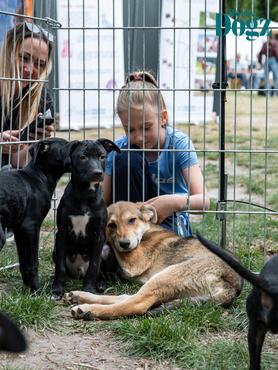
V. V.: In these cases, I think objective observation of behaviour is even more important. How do they react to new situations? How well do they recover after stress? Do they seek contact with people? How impulsive are they? How do they communicate with other dogs? What are their trigger situations? A good shelter or behavioural specialist can help enormously so that we do not simply “feel sorry for” a dog, but truly choose a compatible companion. kölyökteszt.hu can also provide assistance with this.
V. V.: If someone is looking for a dog for a very specific lifestyle, sport, or work, and a predictable genetic background is important to them, then a good breeder can be of enormous value. Adoption, however, can be a fantastic decision if someone is more open, flexible, and primarily looking for a companion. In my opinion, neither is a “morally better” choice – the important thing is making a responsible decision, not ideology.
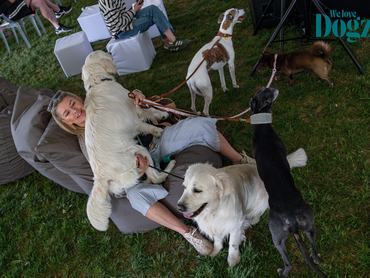
V. V.: The first is: what kind of life do I actually live, and what kind of dog naturally fits into it? The second: what do I desire emotionally, and what can I realistically maintain in the long term? And the third: if this dog is not going to “improve”, will not become calmer, and will not grow out of certain things, can I still live together with them? In my opinion, this last question is one of the most important, because choosing a dog is not about creating a fantasy character, but about living together with a real nervous system for 10–15 years.
Follow us!
facebook instagram youtube spotify
Related articles