German Shepherd Supercharged: The King Shepherd
Published: 2026. 05. 31. 07:30 -
- Photos: Getty Images Hungary • 5 minutes readingPublished: 2026. 05. 31. 07:30 -
- Photos: Getty Images Hungary • 5 minutes reading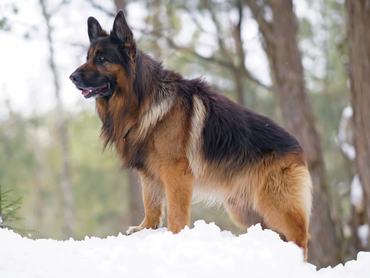
 Set WeloveDogz to appear first in Google search results!
How did Americans attempt to solve the health issues associated with German Shepherds? What was this newly developed dog type “supercharged” with? And is the King Shepherd actually a breed?

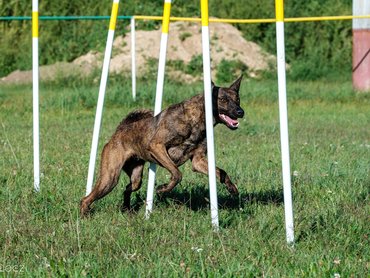
The German Shepherd is undoubtedly among the most intelligent and outstanding service and working dogs. However, its history over the past few decades has not been an unquestioned success story. In military and police services, they are increasingly being replaced by other working breeds – such as Belgian Malinois and Dutch Shepherd. In family settings, meanwhile, we encounter far fewer German Shepherds in garden yards barking unnecessarily and throwing themselves into every possible activity out of boredom.
Besides changing fashions, the main reason for the decline in the popularity of German Shepherds has been the breed’s health problems, particularly the high incidence of hip dysplasia. In recent years, breeding has also split into two directions: hard-working line dogs often have energy levels and work requirements that are too demanding for many modern families, while the more restrained show-line dogs, bred primarily for appearance, are less attractive to the dog-loving public due to their arched backs and sharply sloping hindquarters.
Throughout canine history, numerous attempts have been made to untangle the Gordian knot surrounding German Shepherds, but none have been entirely successful. While the Czechoslovakian Wolfdog is exceptionally healthy, the temperament inherited from their wolf ancestors makes them extremely difficult to integrate into modern family life. Only a handful of bloodlines from the old DDR lines remain, while other German Shepherd hybrids (Sheprador, Shepadoodle, Golden Shepherd, and others) failed to inherit the exceptional intelligence and working ability of their ancestors.
Naturally, the anomalies mentioned above were not limited to Germany and Europe, the homeland of the German Shepherd, but also appeared in America, the centre of “hybrid production”. In a country where almost every breed has been crossed with nearly every other breed at some point – some with surprisingly good results, such as the Canis Panther – it was inevitable that someone would attempt to “improve” the German Shepherd.
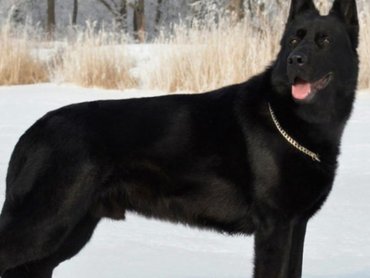
That is exactly what happened, although the result was unexpected. The hybrid known as the King Shepherd was created. While larger than the German Shepherd, the well-known health problems were reportedly minimised or eliminated, and the excellent abilities of the ancestors were preserved in a somewhat more restrained form that fits more easily into family life. According to King Shepherd enthusiasts, this dog is like a supercharged old-style German Shepherd whose strength and size have increased by 20%, while their constant need for work has decreased by at least 30%. Their back is straight, and they do not display the markedly sloping hindquarters typical of show-line dogs.
The earliest days of King Shepherd development date back to the early 1990s, when breeder Tina Barber imported old-style working-line German Shepherds from what was then the Czech Republic. These dogs were crossed with malamutes, white German Shepherds, and at least one Šarplaninac to increase size. The resulting hybrid was named the Shiloh Shepherd, a dog type that still survives in limited numbers in America today. The Shiloh lines were further developed by David Turkheimer, who introduced additional malamutes and long-haired Old German Shepherds imported from Europe into the breeding programme. According to various accounts, Pyrenean Shepherd ancestry may also have been added to increase coat length.
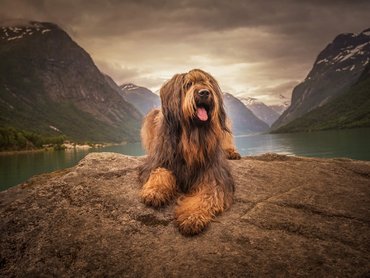
The resulting hybrid type became a large dog, standing between 63 and 75 centimetres tall and weighing as much as 45–60 kilograms. Judging by their appearance, the King Shepherd could never deny their German Shepherd ancestry. Their coat colours are almost identical to those of their German ancestors, while coat length is more reminiscent of Old German Shepherd and Pyrenean forebears. Since encountering such dogs in Europe is extremely rare, available videos and descriptions suggest that the increased weight has not significantly slowed them down; their movement remains distinctly dynamic and fast.
According to King Shepherd enthusiasts, this dog offers exactly what dog lovers and families need in the modern world: they possess the attentive intelligence of the German Shepherd while representing a much calmer and lower-energy dog type. Their activity level and exercise requirements are reduced, yet they remain perfectly suitable for work, guarding duties, and active sports.
And one of the main reasons they are particularly appreciated: for now, they do not appear to suffer from the hereditary diseases so common among German Shepherds. According to surveys, the incidence of dysplasia among them is notably low. The King Shepherd is not currently recognised as a breed by any international canine organisation, but that was never the goal of its developers. Their aim was instead to address the deformities and health issues that had emerged in a long-established breed.
Follow us!
facebook instagram youtube spotify
Related articles