These Were the Most Popular Medieval Dog Names
Published: 2026. 05. 24. 07:30 -
- Photos: Getty Images Hungary; The opening picture is AI generated. • 4 minutes readingPublished: 2026. 05. 24. 07:30 -
- Photos: Getty Images Hungary; The opening picture is AI generated. • 4 minutes reading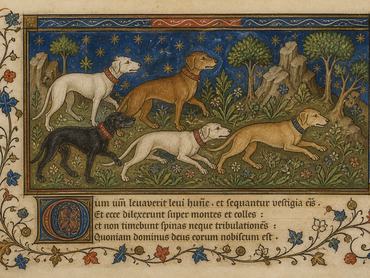
 Set WeloveDogz to appear first in Google search results!
Although in the Middle Ages animals were generally kept for some specific task – for example hunting or catching mice – numerous accounts have survived that suggest many of them were actually loved and cherished, and not merely appreciated for their work, so it is not at all far-fetched to refer to them as pets.

In her book Medieval Pets, Kathleen Walker-Meikle notes that people sometimes used general names for every individual of a particular animal species. Thus, those extensive lists of medieval animal names that we can discover on many websites and posts do not necessarily hold up in reality. A significant proportion of modern internet lists are not the result of historical research, but rather compilations created for entertainment purposes. These often do not provide specific sources, manuscripts, or precise dating. People created these striking names based on the few documented examples, often supplementing the existing list with Early Modern names. Of course, this does not mean that these creative names are not charming or exciting, but it is worth keeping them in perspective if authenticity is also important to us regarding the subject.
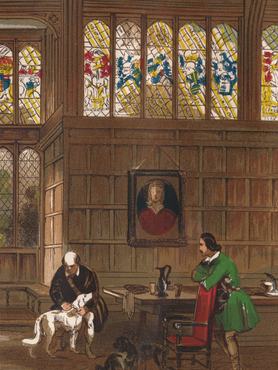
In England, we find dogs that were christened Sturdy, Whitefoot, Hardy, Jakke, Bo, or Terri. Anne Boleyn, one of Henry VIII’s wives, for example, kept a dog called Purkoy, which received their name from the French word pourquoi (“why”), because they were an extremely curious four-legged companion. Geoffrey Chaucer’s The Canterbury Tales includes The Nun’s Priest’s Tale, which also names three dogs: Colle, Talbot, and Gerland.
In Switzerland, a list has survived of 80 dogs that took part in a shooting festival in 1504. From this, it becomes clear that the most popular name was Furst (“Prince”). Other names on the list included Venus, Fortuna, and Turgk. Some dogs were even named after their owner’s profession: Hemmerli (“Little Hammer”) belonged to a locksmith, while Speichli (“Little Spoke”) arrived at the festival as the dog of a cart driver.
The 14th-century French knight Jehan de Seure had a hound called Parceval, while his wife’s dog was named Dyamant. Leon Battista Alberti, the Renaissance philosopher, wrote that his dog’s father was Megastomo (“Big Mouth”). Ludovico III Gonzaga, ruler of Mantua between 1444 and 1478, kept at least two dogs: their names were Rubino and Bellina. When Rubino died, Ludovico ordered that they be buried in a coffin, and also ensured that the animal received a gravestone. Isabella d'Este, one of the leading female figures of the Italian Renaissance, was known to keep many small dogs, two of whom answered to the names Aura and Mamia.
Then there is also a 10th-century Arabic account mentioning that a poet called their dog Muq, and praised the animal in a poem.
"O Muq, may you never taste the misery life can bring! May you never have to drink muddy water!"
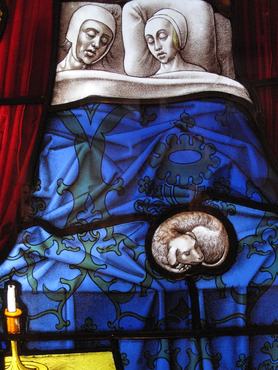
David Scott-Macnab’s research examined an English manuscript entitled The Names of All Manner of Hounds. It was probably created between 1460 and 1480, and is particularly remarkable because of its list of 1,065 hunting dog names. As expected, the names are extremely varied and refer to many different things. Examples include Birdismowthe, Stalkere, and Holdefaste, which refer to desirable traits in a hunting dog. Charlemayne, Ercules, and Arture reference historical or mythological figures. Cherefull, Plesaunce, and Harmeles may have been ironic, but could equally have referred to the sweetest and most pleasant dogs.
Unfortunately, we did not find any Hungarian medieval source that mentioned dog names, the most likely reason being that the nature of surviving Hungarian source materials is entirely different from that of English or French medieval manuscripts. Hungarian literacy primarily consisted of charters, property-related records, ecclesiastical documents, and chronicles, in which animals rarely appeared with individual names; if they were mentioned at all, it was mostly according to their function, such as greyhounds or hounds.
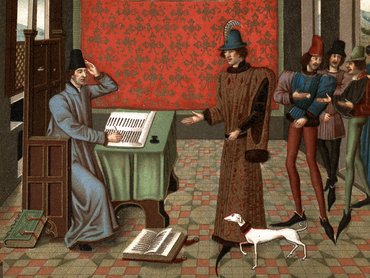
It is more than likely that dogs did indeed have names, especially the hunting dogs of aristocratic and royal courts, but these simply did not make their way into the surviving documents. In addition, Hungarian historical research has not paid particular attention to categorising animal names, so even if scattered name records exist in archival materials, no comprehensive collection has yet been produced from them. (At least, not to our knowledge.)
Follow us!
facebook instagram youtube spotify
Related articles