There Is a Reason Why Your Dog Began to Scratch Themselves in the Autumn Period
Published: 2025. 09. 15. 07:30 -
- Photos: welovedogz.hu • 4 minutes readingPublished: 2025. 09. 15. 07:30 -
- Photos: welovedogz.hu • 4 minutes reading
 Set WeloveDogz to appear first in Google search results!
If we think of seasonal allergy, spring and summer come into everyone’s mind, though in autumn too, almost until the end of November we as well as our favourites may count on the unpleasant symptoms caused by the pollens. And unfortunately, we say it from experience, that the already with food and different other methods supported allergies may flare up again. So unfortunately, there is no guarantee that we can keep everything under control, of which in the past we once already took care.

In the following you can learn more about the seasonal allergy affecting dogs. We will also talk about why the mild rain and the storm accompanied by strong wind may make the symptoms worse.
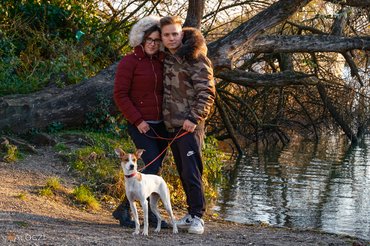
Autumn allergies are common in dogs, and may cause numerous symptoms from tearing to skin problems. Allergy develops when the immune system reacts in excessive measure to a foreign substance, for example pollen. There are plants (especially wormwood or ragweed), which exactly at this time, when the weather cools down, begin to scatter their pollens, but fungi may cause at least as big a problem for those sensitive to them. The autumn wind may carry allergens far, which the dog may inhale, swallow, or simply come into contact with through their skin. The organism reacts to this with inflammation, which may cause itching, redness, urticaria or swelling. The dog often licks or chews the itchy area, which may lead to secondary bacterial or fungal skin infections. This is a vicious circle, which results in even more itching.
At this point however it is important to highlight, that always entrust the diagnosis to the veterinarian! Although environmental allergies are common, many other health problems may cause similar symptoms. It is essential to find out what exactly provokes the dog’s itching or ear infection. For example, the red eye may be a sign of seasonal allergy, but may be caused by infection, injury or even glaucoma as well – all of these require different kinds of treatment.
A pleasant, long rain is indeed able to wash away the pollens in the air, thus reducing the pollen concentration, however allergy sufferers know well, that the heavier storms and the lightly, for a short time drizzling precipitation provoke exactly the opposite. As dr. Krisztina Moric, otorhinolaryngologist, allergologist, chief physician of the Buda Allergy Centre explained to allergiakozpont.hu: under the effect of heavy rainfall, thunderstorm, the pollen grains fall apart into smaller particles. Unlike the intact pollen, the smaller particles may already reach the deeper parts of the lungs, because of this they may provoke stronger allergic reaction and more severe asthma attacks.
In the case of dogs too they diagnose pollen allergy, asthma more and more often. When the allergic dogs wade in the wet grass, their legs and their belly also come into direct contact with these pollens causing irritation. As a result of this we may observe, that the dog licks these body parts more and more intensively, since they itch. As dr. Chris Brown veterinarian writes on his website, the moisture on the surface of the plants worsens the situation further. Those plant proteins indeed, to which the dog is sensitive, dissolve in the water, and are able to cover the skin completely. According to the experts’ suggestion if we are forced to walk allergic dog in wet vegetation, in any case wash down the affected body parts after the walk – with this we may to a great extent reduce the irritation.
Unfortunately allergy cannot be cured for good, but the symptoms can be well treated. In milder case over-the-counter antihistamines may also help, but always ask the veterinarian’s advice, because important is the appropriate preparation’s selection and the exact dosing. For many dogs medicated shampoo may be useful for the alleviation of the itching.
For more severe symptoms there may be need for steroid-containing or other prescription medicines. These may be given in course form or for longer term, depending on how much the problem influences the dog’s quality of life.
In very severe cases allergy vaccinations may also come into question based on the test results.
If the dog received secondary skin or ear infection, that must be treated separately, so that the infection cease.
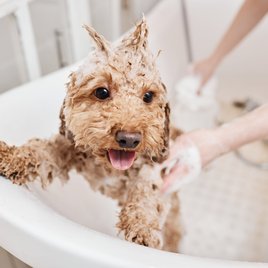
At home too you can do a lot anyway for your favourite. To the wet weather we already referred above, that it is very important to wash through the dog after walk – however you may do this in dry weather as well with a simple wet wipe or towel, once a week bathe the dog with gentle dog shampoo. Hoover and wash bedding often (also the dog’s bed), so that you reduce the dust mite load and the concentration of pollens brought in from outside. Regularly apply external parasite control products, and do not forget the good quality food either.
And last, but not least we highlight, that every dog is unique, thus the safest and at the same time most effective is, if together with the veterinarian you develop a personalised treatment plan.
Follow us!
facebook instagram youtube spotify
Related articles