Can Dogs Eat Oranges and Mandarins?
Published: 2025. 12. 28. 07:30 -
- Photos: Getty Images Hungary • 4 minutes readingPublished: 2025. 12. 28. 07:30 -
- Photos: Getty Images Hungary • 4 minutes reading
 Set WeloveDogz to appear first in Google search results!
Oranges and mandarins are undoubtedly among the most popular fruits of the winter season, as they are rich in vitamins, delicious, and healthy. But the question arises: can our pets eat them too? We will address this issue below, and also mention the use of citrus essential oils.

Among festive treats, oranges, mandarins and peanuts are the healthier options, counterbalancing chocolate and candy. Of course, our pets cannot have the latter, as every owner knows that even small amounts can be toxic to dogs. However, citrus fruits and oilseeds belong to a different category – nevertheless, these should not be given in excess. We won't go into detail about the latter now, but since it has been mentioned, we can briefly summarize that peanuts (without the shell, of course) are not a problem for healthy dogs in small quantities, so they can safely have a few. However, due to their high fat content, it is not recommended to offer your pet large quantities, as this can lead to obesity and pancreatic problems. After this overview, let's return to the question of oranges and tangerines.

Oranges are full of vitamins, with 100 grams providing 59% of a person's daily vitamin C requirement and contributing to the ideal daily fiber intake with 2.4 grams. A certain amount of fiber is also important for dogs to maintain healthy bowel function. It is worth noting that vitamin C is not an essential part of a dog's diet, as they can produce the amount they need themselves – however, there are many benefits to them obtaining it from external sources. For example, vitamin C plays a role in collagen production, which helps with healing injuries, among other things.
Dogs can eat small amounts of orange, but only the flesh of the fruit should be offered to them – the peel and the white part directly underneath it, known as the albedo, can cause digestive problems, and the essential oils they contain can irritate your pet. In fact, to be on the safe side, it is also recommended to remove the membrane separating the segments.

How much orange our pet can eat depends on its size. Small dogs weighing less than 14 kg should not be given more than half a slice at a time, while medium-sized dogs can have one slice. Large dogs, i.e. those weighing over 23 kg, can handle 1-2 segments. Since this is a fruit with a sugar content of nearly 10%, it is not advisable to give a dog more than this, as too much of a good thing can be harmful.
100 grams of mandarin also contains a significant amount of vitamin C, covering 32% of the recommended daily intake, and 1.8 grams of fiber. Fortunately, everything we said about oranges also applies to mandarins, so dogs can eat them in moderation, provided they are peeled and the membranes are removed. The recommended dosage is almost the same as for oranges, at least in terms of volume – dogs weighing less than 14 kg should be given no more than half a segment of orange, which is approximately one segment of a mandarin, and so on. As with oranges, we would like to point out that it is not advisable to exceed this limit for the sake of your pet's health.
Since we've already mentioned citrus fruits, let's talk a little about citrus essential oils. As we mentioned above, you shouldn't give your pet orange or tangerine peels, and the reason for this has to do with their essential oil content. Unfortunately, as much as we humans enjoy the aroma, dogs do not, and these scents are too intense for their sensitive noses, although to be honest, this is the lesser of the two problems.
Although there are essential oils that are safe to use even around small animals, oils made from oranges, mandarins, and other citrus fruits are not among them. This is mainly due to their limonene (which provides the characteristic citrus scent) and linalool (a naturally occurring terpene alcohol) content, which, when ingested by dogs, can cause lethargy, vomiting, diarrhea, excessive salivation, tremors, and weakness, among other things. These symptoms are most likely to occur if the dog licks the essential oil from somewhere, even in relatively small amounts, which can be dangerous for them.
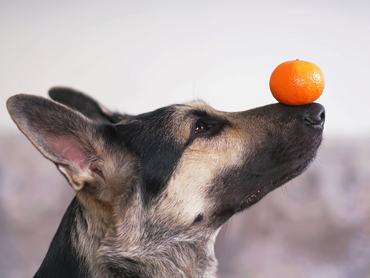
Citrus essential oils can also be harmful even if they do not enter the dog's body directly. They can cause skin irritation if they come into contact with the skin, and can cause irritation of the respiratory system if inhaled. Therefore, even vaporizing them in a poorly ventilated room can have negative effects, the least of which is that their scent is unpleasant for dogs.
Follow us!
facebook instagram youtube spotify
Related articles