This Plant Blooming Around Christmas May Be Dangerous for Dogs
Published: 2025. 12. 08. 07:30 -
- Photos: Getty Images Hungary • 3 minutes readingPublished: 2025. 12. 08. 07:30 -
- Photos: Getty Images Hungary • 3 minutes reading
 Set WeloveDogz to appear first in Google search results!
The poinsettia is an indispensable decoration of Christmas with its red leaves it gives a festive atmosphere to our home.

While we are preparing for the winter holidays, as responsible owners it is also worth paying attention to the fact that our favourites are safe. The poinsettia is an indispensable decoration of most homes in this period, however it is important to know that the consumption of the plant’s leaves can indeed cause poisoning.

The poinsettia is a mildly poisonous plant therefore it must definitely be used with caution, but the dangers caused by it are rarely severe or fatal. However, it is very important to emphasise in the case of every toxic plant, food, material, etc. that the degree of poisoning largely depends on how much the dog consumes of it and to what extent their individual sensitivity is to the given thing. What is more, even their general state of health and their size are influencing factors.
The milky sap found in the stem of the poinsettia contains compounds which are similar to the substances found in household detergents. When a large quantity is consumed, mild vomiting, salivation, or sometimes diarrhoea may occur. Upon contact with the skin, skin irritation may also occur.
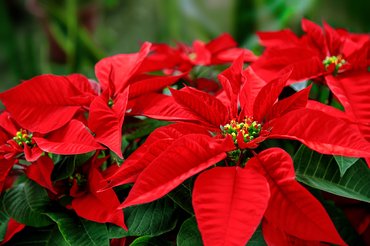
In order that we may keep the poinsettia safely in our home, we must take every reasonable precaution: for example, we should place the plant exclusively in a place where the dog cannot reach it at all. And if it is characteristic of your favourite that they nibble on plants, rather give up this decoration. Although medical intervention is rarely necessary if the dog consumes poinsettia, definitely get in contact with the veterinarian.
The poinsettia (also called Christmas flower or Christmas star) appeared in the United States in the 1820s. Joel Roberts Poinsett, the first Mexican ambassador of the USA, brought a plant called “noche buena” (meaning Holy Night) from Mexico in 1825, which later received the name “poinsettia” after the man in the States; in Hungary it is known mostly as mikulásvirág.
The Christmas-related tradition of the plant goes back to 16th-century Mexico. According to the legend, a young poor girl was inspired by an angel to collect roadside weeds for the celebration of Jesus’s birthday, and the weeds brought forth crimson-red flowers when they were placed on the church altar. Mexican Franciscan monks began to incorporate the poinsettia into their Christmas celebrations in the 17th century. The star-shaped leaves of the plant symbolise the Star of Bethlehem, while the red colour symbolises the blood sacrifice through Jesus’s crucifixion.
To Europe, thus to our country as well, the decoration with poinsettias arrived from America. From the end of the 19th century, the beginning of the 20th century, we find sources referring to this, but at that time it was generally used in the form of cut flower. Presumably in the 1950s–60s the more durable, potted poinsettia became a tradition in homes.
Unfortunately, there are several Christmas ‘essentials’ that are not entirely safe to have around dogs. Learn more about them in this article.
Follow us!
facebook instagram youtube spotify
Related articles