If You Prepare for the Holidays This Way, It Won't Be a Problem for Your Dog Either
Published: 2025. 12. 06. 07:30 -
- Photos: welovedogz.hu/en; Getty Images Hungary • 4 minutes readingPublished: 2025. 12. 06. 07:30 -
- Photos: welovedogz.hu/en; Getty Images Hungary • 4 minutes reading
 Set WeloveDogz to appear first in Google search results!
It's important that your dog feels comfortable during the holidays. Following the rules below will help you do just that.

For many, Halloween marks the beginning of the autumn holiday season, while for others, All Saints' Day and All Souls' Day are the first important dates on the autumn calendar. This is followed shortly thereafter by the beginning of Advent, then Christmas, and finally New Year's Eve, giving way to the new year and New Year's celebrations.
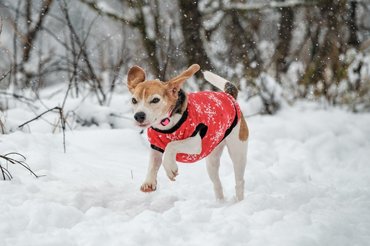
Regardless of which of the listed holidays we mention, almost without exception, they are associated with decorations and traditions that, in one way or another, can cause problems for our pets. Let's start with what connects these holidays: lots of people.
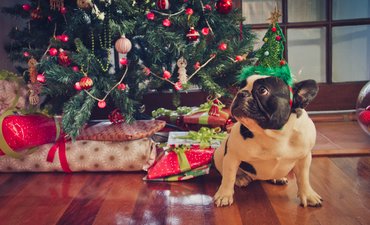
Whether it's a parade or visitors coming to your home, it's important to make sure that all the comings and goings and the accompanying stimuli don't overwhelm your pet. Some dogs tolerate relatives well and even befriend strangers relatively quickly, and a parade with many participants does not cause them any particular stress, but this is not the norm. You know your four-legged friend, so you know which category they fall into. If they don't tolerate this kind of sensory overload well, always make sure they have a quiet place to retreat to, and don't take sensitive animals into crowds! Basically, we recommend that instead of organized fairs and parades, you go to events specifically designed for dogs, which the organizers tailor to the needs of animals.
It is also important to clarify the rules with visitors: how much they are allowed to interact with your dog, what your dog specifically does not like, what they are not allowed to give your dog (it is best if they do not offer anything, except for treats, and even then only in moderation), and also discuss with them if you do not want them to interact with your pet at all.
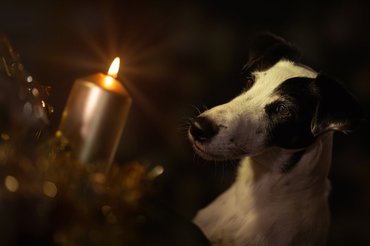
Candles and lanterns are also common elements of the holidays listed above: if you also love candlelight, always make sure that your pet does not knock over a burning lantern. This will protect them from burns and your home from a possible fire. Every year, we are warned that our pets are responsible for a large number of fires. The safest option is to use LED lamps on your table instead of open flames.
Many festive dishes and delicacies can cause problems for our pets. The most serious cases are when the food contains toxic ingredients. We have written numerous articles on this topic, so here is just a summary: cocoa, due to the theobromine and caffeine it contains (and therefore all chocolate and chocolate sweets), grapes, raisins, onions, alcohol, the aforementioned caffeine, and birch sugar (xylitol) are all toxic to animals.
In addition, all heavy, fatty, spicy dishes and sugary sweets can cause digestive problems, so don't offer these to your dog. Bones and fish bones should be avoided due to the risk of choking, internal injuries, and intestinal blockage. Since dogs often help themselves, be careful not to leave anything in an easily accessible place. (At Christmas, candy canes and gingerbread cookies hung on the tree will be tempting – it is better not to decorate with these if you have a dog.)
Choose decorations that cannot cause injury: your dog cannot chew or swallow them, get tangled in them, get an electric shock from them, step on them with its paws, etc. Also, place decorations where your pet cannot reach them.
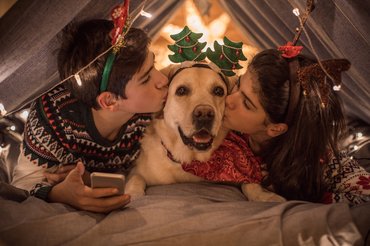
We would like to mention the involvement of dogs in the celebrations: we do not support dressing our pets in uncomfortable costumes, nor do we think it is appropriate to dress them up for a few funny photos. This is only a source of stress for them! Instead, let them be dogs and participate in the preparations and then in the festive moments. These will be the most sincere and happiest scenes in the photo album.
We know that holidays are a break from everyday life and, in the best case scenario, they give us the opportunity to finally relax and spend time with our loved ones, but even during this period, it is important that your pet does not suffer any deprivation. This includes maintaining their usual daily routine in terms of feeding, walks, and other shared activities, such as playing. In fact, if you can, add an extra walk or activity together—it will do you both good, as holiday preparations can be exhausting, and just like animals, we humans can also become overwhelmed during this time.
Follow us!
facebook instagram youtube spotify
Related articles