7 Signs That Show Your Dog Respects You
Published: 2026. 03. 08. 07:30 -
- Photos: Getty Images Hungary; welovedogz.hu • 6 minutes readingPublished: 2026. 03. 08. 07:30 -
- Photos: Getty Images Hungary; welovedogz.hu • 6 minutes reading
 Set WeloveDogz to appear first in Google search results!
In the human world, respect is the foundation of a good relationship, so we tend to expect the same from our pets. These actions show that a dog respects their owner.

On the one hand, respect is a worn-out concept that for many people has lost its meaning – official letters begin this way, and it is often just a formality without real substance. On the other hand, it can be said to be the driving force of a well-functioning relationship – in fact, it is not an exaggeration to say that a well-functioning society cannot exist without it either. The explanatory dictionary of the Hungarian language defines respect as follows: “The feeling and behaviour of someone who respects someone or something; the recognition and appreciation of someone’s or something’s merit, value or significance. (…) The expression of this feeling through behaviour and outward signs.” Respect is therefore a distinctly human cognitive concept; nevertheless, we still expect it from our pets. For this reason, it is worth reframing somewhat what our four-legged companions can realistically offer in this regard. Below we will of course also address what the signs of respect may be, but first we will talk a little about what this expression might mean from a dog’s point of view.
First of all, it is worth examining what owners usually mean when they say their dog does not respect them. The question of respect often arises in connection with obedience, for example when the dog does not even twitch an ear when called, or pulls on the lead. For a long time the answer to this was that the dog was dominant, or that the owner was not dominant enough, and that these problems stemmed from a lack of respect. In the dog world, the question of respect unfortunately often goes hand in hand with pack theory and punishment-based training methods,* which are now considered outdated.
*It is important to add that this does not mean the dog should be pampered and never given rules or told no. Rather, it refers to a change in perspective: replacing aversive, intimidation-based methods that often approach the boundaries of violent training. Instead of displays of force, the focus is on understanding and cooperation. This is quite a nuanced topic, which we will not go into in more detail here, but in some of our earlier articles you can read about it.
Above all, it is worth remembering that the concept of respect and its human expressions cannot be applied one-to-one to the dog–human relationship. In other words, as owners it is important to clarify what realistic expectations we can have of our dog in this regard. Returning to the principles of modern dog keeping – although we did not highlight it as a separate point in our article, its message is still clear – the dominant modern approach focuses, among other things, on the relationship between dog and owner and on clear communication, the foundation and by-product of which is trust. From these come obedience and what we may call respect in the case of dogs.
True respect between a dog and its pet parent is based on companionship and trust, not fear, in fact, one of the best signs of respect is that the dog is not fearful towards its pet parent
– summarised veterinarian Hilary Humm-Beatty for ParadePets.
Trust and respect are therefore closely connected, although some believe the word respect should perhaps no longer appear in the vocabulary of dog owners, at least not in relation to their pets. According to trainer Victoria Stilwell, for example, words such as “trust”, “connection” and “listening” should be used instead. According to the trainer, “if a dog trusts you, they are more likely to pay attention, understand and respond when you want them to do something. And if they do not, it is not because of a lack of respect,” but rather because of misunderstanding or incomplete or incorrect communication.
Despite the above, owners often wonder whether their dog respects them. The following signs indicate that, as much as is possible for a dog, your pet respects you.
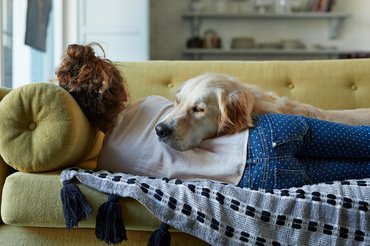
If the dog can relax around you and does not feel they must remain constantly on alert, it is a clear sign of trust and respect. This can appear in the fact that in a familiar environment your pet’s posture is not tense and reflects calmness.
For dogs, prolonged eye contact can be threatening, but a soft gaze reveals trust, a sense of security and affection.
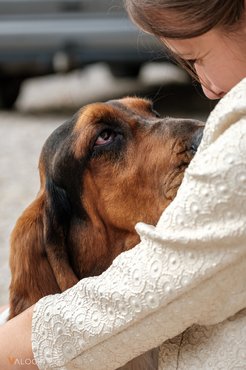
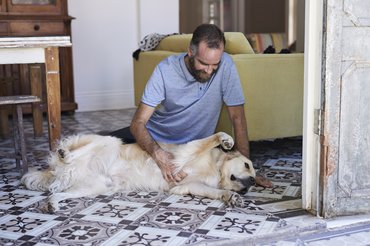
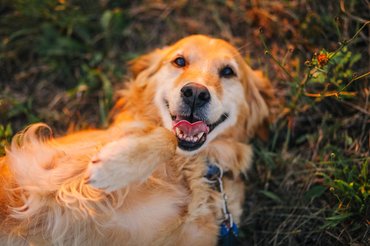
Showing the belly, just like eye contact, can have multiple meanings. Typically, a dog shows trust and respect by lying on their back, since this is a vulnerable position. However, sometimes it is submission and sometimes simply a request for a belly rub. It is important to learn how to distinguish between the two, as they require different reactions from the owner: in this article we explain when you should and when you should not stroke a dog’s belly.
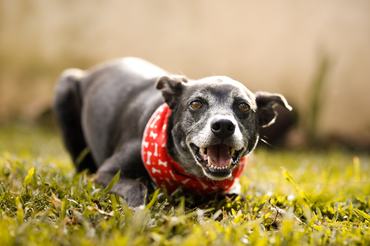
This hardly needs further explanation, as we have already discussed above that true respect is not based on fear, but it cannot be left out of this list.
We have already touched on this, but it is worth mentioning again: if your pet listens to you in everyday life, it is quite a good indicator that they respect you. However, it is important to emphasise that this is not black and white, and there are situations when environmental stimuli make things more difficult for the dog. This does not automatically make them disrespectful – usually they are simply excited, or in worse cases afraid. What may be lacking, however, is socialisation or communication. Clear, understandable and consistent communication is key to building trust and living together harmoniously. A dog’s socialisation and getting them accustomed to different situations allows them to remain obedient and responsive even in more stimulating environments.
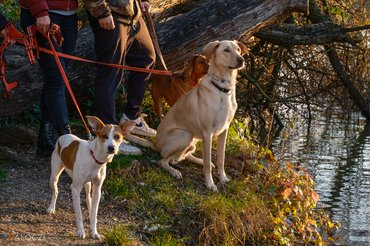
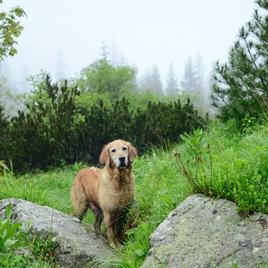
From the previous point it may already be clear that this also has several conditions, yet it is indeed a very positive sign if the dog stays close to their owner even in unfamiliar situations. This suggests they consider their caretaker a safe point and are strongly attached to them.
If your dog checks in with you during a walk, looks back at you while exploring, or stays nearby in new situations, it shows they trust your guidance and feel secure
– explained veterinarian Aimee Warner to ParadePets.
Although it also says a lot if your pet waits for you at the door when you arrive, this point primarily refers not to that but to the dog waiting for your guidance. This can appear in many areas of life, as seen in the quotation above.
It is worth noting that this is not a list where every point must be ticked off to make sure that our pet respects us. Every dog is different, so they may communicate their trust towards their owner in different ways, and there is no need to be discouraged if some points do not apply to your dog. This is also important to emphasise because some of the signs above – especially the last three – are not only about trust and respect but also about how and what the owner has taught the dog.
Follow us!
facebook instagram youtube spotify
Related articles