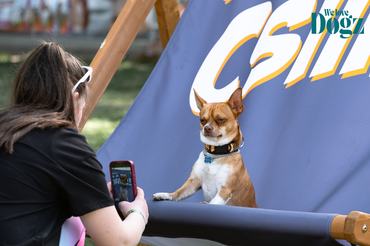
The AKC Has Recognized 3 New Dog Breeds
Published: 2026. 01. 18. 07:30 -
- Photos: Getty Images Hungary • 5 minutes readingPublished: 2026. 01. 18. 07:30 -
- Photos: Getty Images Hungary • 5 minutes reading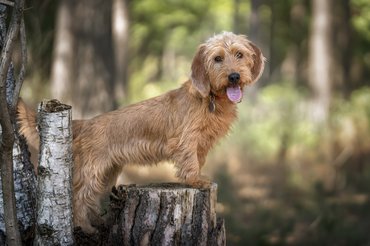
 Set WeloveDogz to appear first in Google search results!
Three new dog breeds have recently been added to the American Kennel Club (AKC) list of officially recognized breeds, making them eligible for numerous American dog shows and likely to enjoy greater popularity among pet lovers.

The AKC does not limit the number of breeds it may recognize – it currently lists 205 breeds, including new ones such as the Basset Fauve de Bretagne, the Russian Tsvetnaya Bolonka, and the Teddy Roosevelt Terrier. According to spokesperson Brandi Hunter Munden, they do not "add dogs indiscriminately," but rather "have created a framework for development, breed standards, competition, and education in the United States." Let's see what you need to know about the new team members!
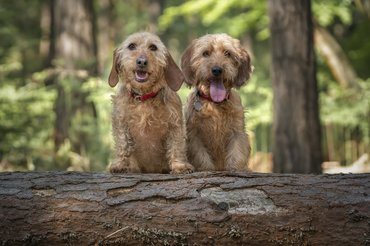
The Basset Fauve de Bretagne is an ancient French hound whose origins date back to the 1500s, when King Francis I of France owned a pack of dogs descended from this breed. Until the French Revolution, only the aristocracy was allowed to keep hunting dogs and hunt on horseback, a law that was abolished in 1789. However, most peasants and farmers did not have horses, so they needed shorter-legged hunting dogs, which led to the development of the brown basset hound we know today. The project proved so successful that by the 19th century, only these dogs were used to hunt rabbits, foxes, deer, and wild boar.
The breed is small/medium-sized, compact, robust, and perfectly adapted to even the most difficult terrain in France. It is lively and fast for its size, very resilient and energetic. Its coat is wiry and short, ranging in color from light beige to wheat yellow to brick red.
The breed is still popular and versatile as a hunting dog in France, where it is not uncommon for them to be kept as family dogs. The Basset Fauve de Bretagne is determined in the field, knows no fear, and always takes its work very seriously. As a pet, it is lively, cheerful, and gets along well with children. It is not suitable as a guard dog, as it is friendly even with strangers. It has high energy levels and loves challenges, so it is important to exercise it regularly and give it tasks to do.
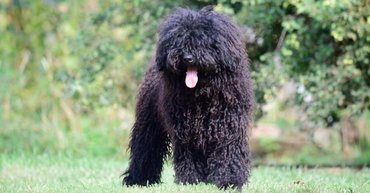
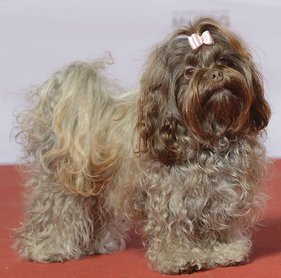
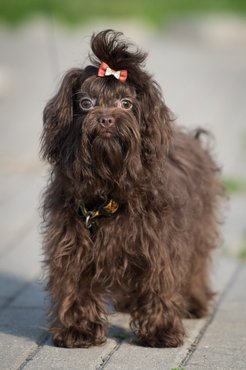
The origins of the Russian Tsvetnaya Bolonka date back to the early 1950s, when few dogs were available to the general public in the country. A group of Russian dog lovers in St. Petersburg (then Leningrad) wanted to create a new breed with dark fur. The first mating produced a black puppy, Tin-Tin, whose parents were coffee-colored and white, respectively. At that time, there were very few miniature dogs with the right phenotype available, so a white dog named Trifon was brought to Leningrad from Hungary, while a coffee-colored dog named Zhuzhut was purchased from a circus that was performing in Leningrad at the time. Several foreign miniature breeds were also included, such as the Maltese, the Bolognese, and the Si-cut. By the end of the 1950s, through careful and rigorous selection—initially based mainly on phenotype (i.e., the desired external characteristics), and later on the quality of the offspring—a fairly uniform stock had been developed.
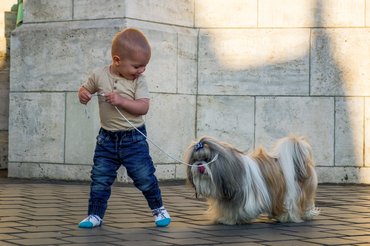
The Russian Tsvetnaya Bolonka was therefore bred specifically to be an ideal pet and companion. It is a small, strong-built, well-proportioned dog, slightly longer than it is tall. Its appearance is somewhat shaggy due to its wavy or curly coat. Its movement is graceful, and it carries its tail above its back. All colors are permitted except solid white, spotted, piebald, and merle.
An ideal companion, according to its fans, it is extremely funny, very intelligent, and extremely loyal to its family. Lively, yet easy-going and sociable, the Bolonka gets along very well with children. Although it barks quickly, with early training in proper behavior, it will not become a constantly yapping pet. Compared to other lap dogs, it is quite independent, so it needs early socialization. If we do not neglect this, it will get along very well with other dogs and people.
The Teddy Roosevelt Terrier is an American breed that can be traced back to terriers brought over by English miners and other working-class immigrants. These versatile four-legged friends were probably crosses between smooth-haired fox terriers, Manchester terriers, bull terriers, beagles, whippets, small Italian greyhounds, and the now extinct English white terriers. They were used for rat catching, so they quickly became known as rat terriers. Two types of rat terriers developed, distinguished primarily by leg length. The short-legged rat terriers were named in honor of President Theodore Roosevelt.
The Teddy Roosevelt Terrier is a small dog with short legs and a powerful build. Viewed from the side, it is rectangular in shape, with a solid but not coarse bone structure. It is muscular, but not overly so. It can be any color, but always has white markings in a piebald or tuxedo pattern.
A versatile companion, capable of hunting above and below ground, as well as forcing small game up into trees. With its protective nature and well-developed pack instinct, it will loudly signal the presence of any strange animal or person. A devoted, playful companion that gets along well with children, cats, and other dogs if raised together, but may be reserved with strangers. Its desire to please and intelligence make it very easy to train.
Follow us!
facebook instagram youtube spotify
Related articles