How Dogs And Cats Understand Each Other - Even Without Words
Published: 2025. 08. 03. 07:30 -
- Photos: Getty Images Hungary • 4 minutes readingPublished: 2025. 08. 03. 07:30 -
- Photos: Getty Images Hungary • 4 minutes reading
 Set WeloveDogz to appear first in Google search results!
How do a dog and a cat communicate with each other? After all, they are two different species with different means. Read our article to find out how they communicate with each other.

Although individuals of the species do not speak each other's language, they can communicate with each other using their vocalizations, scent and non-verbal communication. They can learn each other's signals and, if socialised properly, can even become friends.
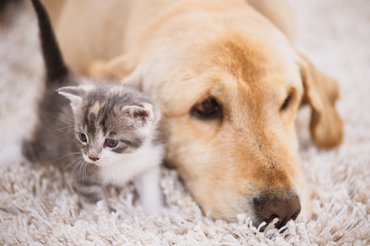
Our little friends let each other know that "I love you" or the opposite - "stay away from me" - primarily through vocal signals and body language, and in some cases pheromones. Although their body language and communication styles are nuanced, they are able to exchange information by understanding their differences. We know for a fact that these little furballs use their tails, posture, ears, mouth and tongue movements and other body language, as well as different vocalizations, to signal their location, warn of potential danger and express their emotions or needs.
Both species have a highly sophisticated sense of smell, which can be used to gather a wealth of information about each other. They can help each other determine the sex of the other and even detect each other's diseases. Olfactory communication is also important because they can associate a particular smell with good experiences, which can form lasting associations.
Although pheromones are generally used by species to communicate between themselves, it is also possible that information transmitted by glands can be perceived by other species.
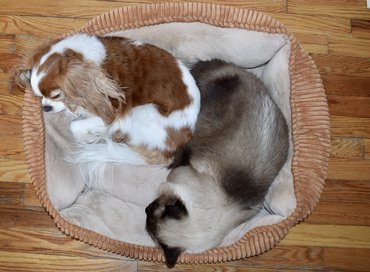
Our fur seals are able to learn each other's body signals, which enable them to communicate effectively. Most of these are easily interpreted not only by their own species: a growl, a show of teeth, can be interpreted by most animals and humans.
Interpreting signs in your own language is one thing. But research shows that our pets are intelligent and adaptable enough to decipher signals from other animals. (Most interestingly, they are most adept at learning human signals. They can pick up everything from a human gaze, non-verbal cues or recognition of emotional state.) They use the same mechanisms they use for their own kind. Early socialisation is key to developing good communication. Age, play and closeness are essential elements for developing social skills and bonding. If animals meet at a young age, they are more likely to learn each other's language.

Dogs and cats in a friendly relationship can learn to interpret non-verbal cues even if they are similar but have opposite meanings:
Sometimes they even adopt the communication techniques of the other species. For example, nose-to-nose greetings or head rubs.
While we can't necessarily make a full impact on the relationship between our pets, we have some tips to help you form a bond.
Under the right conditions, dogs and cats can communicate almost as effectively as with their own kind. Socialisation and patient presentation are key. If done right, our furry friends can be the best companions!
Follow us!
facebook instagram youtube spotify
Related articles