Why Does Your Pet Not Listen to You? They Are Not Necessarily Stubborn
Published: 2025. 12. 15. 07:30 -
- Photos: Getty Images Hungary • 4 minutes readingPublished: 2025. 12. 15. 07:30 -
- Photos: Getty Images Hungary • 4 minutes reading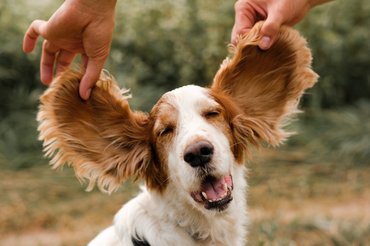
 Set WeloveDogz to appear first in Google search results!
It is quite frustrating when, sparing neither time nor energy, we teach our dog, yet for some reason there are still times when they do not listen to us. What is more, sometimes it feels as if those beautiful ears are only on our pet’s head for decoration, and this is easy to describe as stubbornness, yet most often this is not what lies behind the disobedience. In the following, we present 5 possible reasons.

It may have happened to you as well that your dog seemingly forgot everything that you had previously practised many times, and that already worked so reliably at home. Do not worry, you are not alone with this, numerous owners experience this “experience” day after day, and look for a solution to it. The latter may arrive in many forms, yet it is undoubtedly common that one encounters advice whose basis is that the given four-legged companion simply needs to be brought up better, and is otherwise like this because they are stubborn. There are indeed dogs who are more independent characters and more stubborn creatures, but this is not always the explanation behind the behaviour, as Jill Hassevoort, certified training partner of the Karen Pryor Academy, also explains in the description of the video below.
There are situations in which the dog does not feel comfortable, what is more, they even trigger stress or fear in them. At such times it becomes more difficult for them to concentrate and to solve tasks, thus indeed, they will also react less to the learned command words. Signs of stress may include, among others, the following: ears flattened to the head, lip licking, yawning, pulling the tail between the hind legs, bristling fur on the nape, tense body posture, avoiding eye contact, and scratching. Signs of fear may further be growling, whining, barking, hiding, slipping behind the owner, dilated pupils or visible whites of the eyes, and drooling. Numerous situations may trigger stress or even fear in a dog, therefore it is important that we recognise the signs and know our dog well. In this article you can read about what dogs fear the most, according to a rehabilitation trainer.
It is often heard that dogs hide pain well, yet this is only partly true, as there are small, often almost unnoticeable signs that may indicate pain. One such less conspicuous, what is more, for some even frustrating sign may be if a dog does not perform an exercise, or does so only reluctantly. Pain may have behavioural and physical manifestations as well, one of which you may inform yourself in more detail from this article of ours.
We take the last three reasons under one heading, as these are all connected to the teaching of the dog, yet to its different aspects.
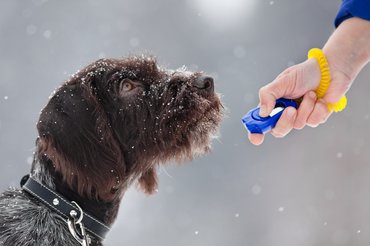
Reinforcement history refers to the frequency or number of times that a particular behavior your dog does has been reinforced. Dogs thrive on routine and reinforcement, so the more they rehearse a behavior, or the more times that behavior has been reinforced, the more likely it is to be repeated.
– they formulate on the AKC website.
Thus, next time, before you label your pet as stubborn, think through whether one of the above points may explain their disobedience. And if you see that yes, then it may be worth asking for the help of a professional, who may help in uncovering the problem and mapping out possible solutions.
Follow us!
facebook instagram youtube spotify
Related articles