5 Dog Breeds That Could Be The Kuvasz's Twin: That's Why They Look So Similar
Published: 2026. 02. 01. 07:30 -
- Photos: welovedogz.hu/en; Getty Images Hungary; Wikimedia Commons • 5 minutes readingPublished: 2026. 02. 01. 07:30 -
- Photos: welovedogz.hu/en; Getty Images Hungary; Wikimedia Commons • 5 minutes reading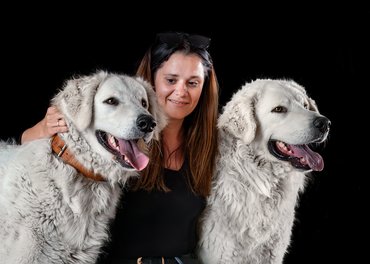
 Set WeloveDogz to appear first in Google search results!
We had a Kuvasz when I was a child, so I am particularly biased about the breed. For a long time I believed that it was a unique and inimitable breed, both in terms of mentality and appearance. I thought so until I came across the magazine and delved deeper into the world of dog breeds. That's when I noticed that in several places in the surrounding countries we can discover national dog breeds that are similar to the Kuvasz, even in their voice.

Of course, this does not mean that I am any less of a fan of the Kuvasz. In fact, as I learned the history of these dog breeds, I became more and more convinced that although they are probably “close relatives”, there is only one Kuvasz. Neither the Slovensky Cuvac, nor the Great Pyrenees, nor the Maremma Sheepdog, nor the Tatra Shepherd Dog, nor the Akbash can say that their ancestors arrived in the Carpathian Basin with the conquering Hungarians, or that King Matthias trusted them more than his palace guard.
Of course, as is often the case with dog breeds, not much. There are several theories that connect the dogs listed in this article in one way or another, but it is important to emphasize that the following are only possible scenarios, we do not know for sure, and it is very likely that we will never know, even despite genetic analysis.
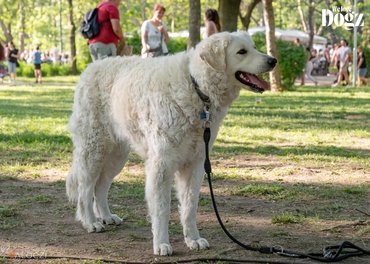
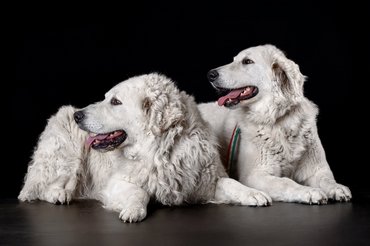
The Kuvasz, the Slovensky Cuvac, the Great Pyrenees, the Maremma Sheepdog, the Tatra Shepherd Dog and the Akbash are all large, white herding dogs that have been bred for centuries to guard flocks and other livestock, often in mountainous environments. Historical sources and experts suggest that these breeds may have descended to some extent from a common European "group", and they are often associated with each other due to their similar appearance and function. However, genetic studies do not prove that these breeds are descended from a single common ancestor. Rather, analyses indicate that they may have evolved from multiple, partially overlapping lineages, and that there has been significant gene flow between them during human migration and animal husbandry. The researchers also identified that the Kuvasz has a relatively distinct profile from the other breeds on the list.
The Slovensky Cuvac is descended from northern, arctic wolves, the remains of which have been found in the mountainous regions of Europe since the Ice Age. More precisely, on the northern slopes of the Caucasus, in the Rhodope Mountains, in the Carpathians, especially in the Tatra Mountains, in the Abruzzo Mountains, in the Pyrenees and in the northern part of the Alps. Given this, it is perhaps not so surprising that the breeds on this list are almost as similar in sound.
Slovak alpine farming has extremely ancient traditions. The Slovensky Cuvac, together with mountain sheep and Hutsul horses, forms the basis of this economy, which utilized various animals in a unique way. These mountain people were largely free, they were not subject to medieval forced labor. Their work was to protect the borders, and they were paid only in the form of sheep's curd. Their headquarters were in Košice, and they essentially formed a shepherd and military organization called the Wallachischer Bund, and their members performed their service on the mountain pastures, always together with their guard dogs. The Slovensky Cuvac is an excellent guard, signal, companion and assistant dog for shepherds. Its usability was also utilized in guarding cattle and in driving poultry and other domestic animals to pasture.
Tourists visiting mountain farms to buy cheese and other products were delighted by the fluffy puppies. The breed was also brought to the lowlands, where the Cuvac was often considered a luxury breed due to its unique appearance.
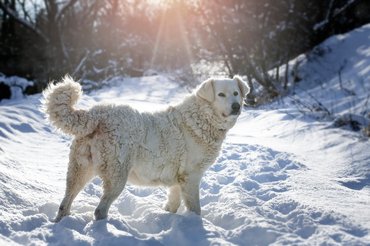
The Tatra Shepherd Dog, also known as the Polish Mountain Sheepdog, probably originated from large, white guard dogs brought with them from Asia by nomadic shepherds. This theory also supports the relationship between the listed dogs. The breed as we know it today originated in Podhale, a small region in southern Poland, at the foot of the Tatra Mountains. Tatra Shepherd Dogs were developed as working dogs and served a dual purpose: they had to prove themselves as herding dogs and guard dogs. They are hardy, strong dogs that can work effectively even with a modest amount of food. They can withstand harsh cold, but also hot, dry heat.
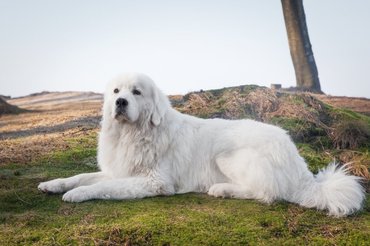
These dogs are still used in the Abruzzo region today; they are closely linked to the culture, even though sheep farming has declined significantly in the area. However, those who keep sheep almost certainly use Maremma Sheepdog to protect their flocks from wolves and other predators. Its exact origin is unknown, but we can see such dogs in ancient Roman drawings. However, according to other opinions, it comes from Central Asia, from large, white, oriental shepherds.
In its native language, it is Cane da Pastore Maremmano Abruzzese (Maremma and the Abruzzo Sheepdog) – this refers to the fact that the modern breed is a descendant of ancient shepherd dogs used in the Maremma and Abruzzo regions of Italy. At one time, the dogs from these two regions were considered two different breeds, but since around 1860, thanks to intensive crossbreeding, they have been recognized as one breed.
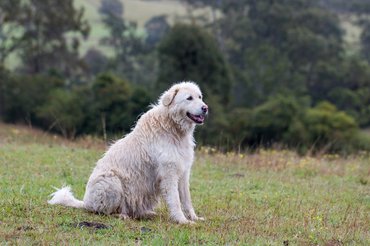
According to the most common theory, the Great Pyrenees is also a descendant of those white, large-bodied sheepdogs that arrived in Europe from Asia during the migrations. Its appearance has changed almost nothing over the past centuries. In addition to being practical in every respect, it has also managed to remain elegant. The national breed of France, its original task was to protect flocks. It began to spread in the noble courts from the 15th century, and by the 17th century it was already considered a distinguished companion dog. During World War II, it was often used to carry loads; due to this and the decline in herding, the breed's popularity declined sharply. However, thanks to dedicated fans, it has now been made popular again as a family dog.
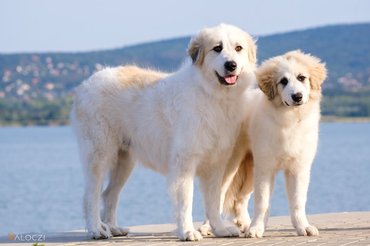
The Akbash was and is still used to guard cattle and sheep; it is native to the plains and mountains of western Turkey. Although the breed's origins are unclear, it is known to be an ancient, pure breed. As described by the UKC, it is considered the Turkish equivalent of the white guarding breeds found in the northern Mediterranean basin. It is unique in that it is the only one to have a unique combination of Mastiff and Bloodhound characteristics.
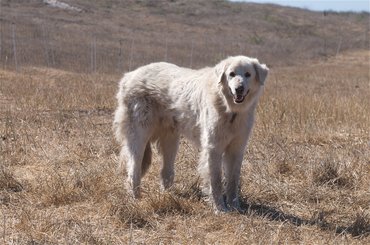
(The cover photo shows Kuvaszs.)
Follow us!
facebook instagram youtube spotify
Related articles