

Arctic Foxes Grow Their Own Flower Gardens: This Is How This Rare Wonder of Nature Is Created
Published: 2026. 05. 17. 07:30 -
- Photos: Getty Images Hungary • 3 minutes readingPublished: 2026. 05. 17. 07:30 -
- Photos: Getty Images Hungary • 3 minutes reading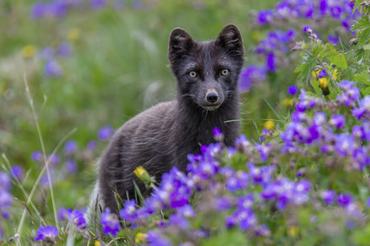
Biologists working in Alaska and Canada have uncovered the secret of Arctic fox dens decorated with flowers and green grass, which shine like jewels in the grey barrenness of their habitat, the tundra.

Arctic foxes create the flower gardens of their dens through composting, meaning they fertilise the soil with their own faeces, urine, and the remains of prey animals. The nutrient-rich organic manure enriches the earth with nitrogen, which helps plants grow. Grasses, willows, and even flowers flourish around a fox den.
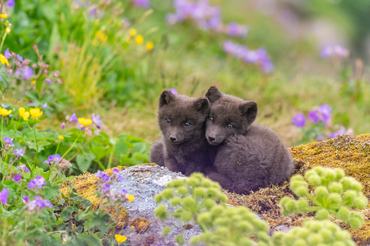
Brian Person, a wildlife biologist for the North Slope Borough, spent nearly a decade studying the movements of these predators that roam vast territories in northern Alaska. The 3–5 kilogram Arctic foxes mainly hunt lemmings and smaller prey, and can be found throughout the Arctic surrounding the polar circle, from Alaska and Canada all the way to Europe and Greenland. However, Arctic foxes move too quickly to be followed in real time, so fox dens are crucial for better monitoring the population.
The authors of the first scientific study conducted on the dens called the foxes “ecosystem engineers”. Experiments carried out in 2014 near Churchill showed that the foxes’ organic waste supports nearly three times as much plant biomass during summer as the rest of the tundra. James Roth, a biologist at the University of Manitoba, and their team pointed out that the increasing appearance of plants has significant effects and does not merely create a small green patch on the tundra: it also attracts herbivores and scavengers, which then serve as food for other animals. Arctic foxes therefore help sustain the functioning of an entire food chain with their flower gardens.
Roth told CBC that around one hundred fox dens can be found along the coast of Hudson Bay, and some of them are several hundred years old. Digging a new burrow in frozen ground requires enormous effort, which is why foxes reuse their dens.
The cold Arctic zone of the tundra is characterised by long and harsh winters, as well as cold summers. The annual average temperature ranges between 0 and -25 degrees Celsius, so burrows are extremely important from the perspective of protection. Families use the dens across generations, and their systems are extremely complex, with several exits. They are generally located on ridges, hills, and riverbanks, and due to the frozen ground, their construction can take years.
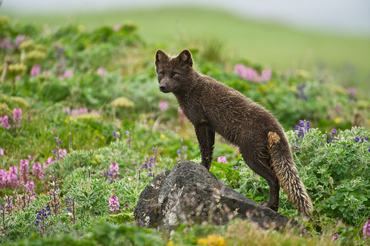
With litters averaging 8–10 cubs – though there may even be as many as 16 – foxes accumulate significant amounts of urine, faeces, and prey remains around their dens. Interestingly, during winter they do not drink water, nor do they even eat snow, because this would lower their body temperature. During this period, they satisfy their fluid requirements exclusively from their food, meaning their urine is also extremely concentrated and nutrient-rich. During times of abundance, a single fox may even hide as many as one thousand goose eggs during the mating season – which becomes another, less visible nutrient source for the environment and occasional scavengers.
The greater plant diversity created by Arctic foxes gives herbivores the opportunity to find food during the short summers, but many other species also visit these dens. Reindeer and other herbivores are attracted to the lush vegetation, while scavengers search for the carcasses of Arctic geese.
Follow us!
facebook instagram youtube spotify
Related articles
The 5 Largest Canids in the World
Life • 6 minutes
7 Dog Breeds That Hardly Shed
Care • 4 minutes