Can Dogs Eat Chestnut?
Published: 2025. 09. 29. 07:30 -
- Photos: Getty Images Hungary • 4 minutes readingPublished: 2025. 09. 29. 07:30 -
- Photos: Getty Images Hungary • 4 minutes reading
 Set WeloveDogz to appear first in Google search results!
Chestnut is not only one of the characteristic elements of the autumn landscape, but also a favoured delicacy for many. But might it be safe for our dogs? The answer: in certain types yes, however it requires circumspection and moderation.

Many owners may experience that their favourite desires everything. Although certain human foods in small quantity are safe for dogs, others may even be dangerous. The nuts, among them the chestnut, may seem a promising reward snack: small-sized, nutrient rich, but not all of them are safe.
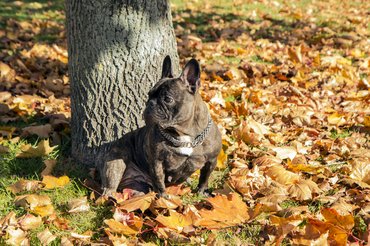
Dogs can safely eat certain chestnuts, although of these in our country only one kind exists. In Hungary, two kinds of chestnut are to be found: the sweet chestnut (Castanea sativa), which is edible, and the horse chestnut (Aesculus hippocastanum), which is poisonous for animal and human alike. Their exterior may be similar, but their effect on the dog is very different.
In their distinction their appearance may help us:
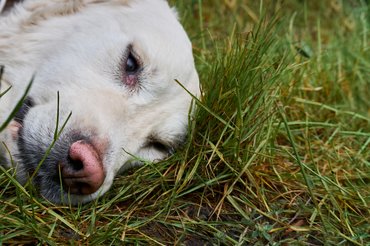
Within 1–6 hours following the consumption of the fruit the symptoms appear, but it may even last 2 days until they appear:
Although dogs rarely consume so much chestnut that it would have significant health effect, in small quantity they may obtain nutrient: complex carbohydrate, fibre, vitamins (C, B-vitamins) and minerals (potassium, magnesium, phosphorus, copper, manganese). In addition, it may be given as perfect energy source and digestion-supporting supplement, however naturally it does not replace whole foods.
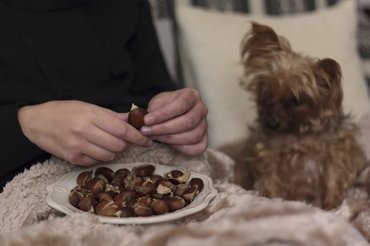
The sweet chestnut thus is not poisonous for the dogs, but of course here too the principle of the golden mean prevails. Given with proper preparation and moderation it may be a super delicacy, however we must in any case pay attention to begin with small quantity, then in the later times also maintain the “10% rule”, which means that the given quantity should not make up more than 10% of the dog’s daily calorie intake. Especially important, that in every case we observe the reactions and if we experience anything strange or unusual, in any case we turn to a veterinarian.
Important!
The commercial chestnut puree cannot be given because of the sugar, xylitol, and spices contained in it. The 100% sweet chestnut flour is safe in small quantity, but very high carbohydrate content.
If you would like to reward your dog with chestnut from time to time, before it is worth to consult the veterinarian, because every dog is different, and this type of delicacy is not for everyone. Always give only small quantity, and observe their reaction, in order to avoid unpleasant side effects.
Follow us!
facebook instagram youtube spotify
Related articles