Dalmatian breed description: the intelligent and sensitive energy bomb
Published: 2025. 08. 11. 07:30 -
- Photos: Getty Images Hungary • 6 minutes readingPublished: 2025. 08. 11. 07:30 -
- Photos: Getty Images Hungary • 6 minutes reading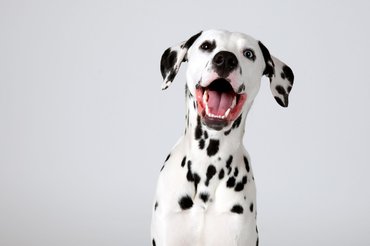
 Set WeloveDogz to appear first in Google search results!
The versatile spotted beauty was bred almost to perfection over the centuries, yet, like every fine instrument, the Dalmatian also has Achilles’ heels.
If someone wants to get to know the Dalmatian’s personality based on the rightly popular Disney cartoon and film, 101 Dalmatians, they will not be greatly disappointed. Just like their version loved on the cinema screen, the Dalmatian in real life is also a family-centred, brave, lively and intelligent breed, whom, however, one must never underestimate.
Dogs with an exterior similar to the modern breed standard’s spotted coat were already depicted by ancient Egyptian and Greek works of art. The Dalmatian, however, officially comes from Dalmatia, the area of today’s Croatia.
In the early period of their breeding, the beautiful animal was used in countless areas. They worked as a hunting, shepherd, rat-catching dog, but also as a circus and carriage dog.
This latter career path finally determined their further fate as well. After the breed was introduced among English nobles at the end of the 18th century, everyone wanted magnificent spotted dogs at the side of their carriage. At this time they began to be referred to as the carriage dog, and the nickname stuck to such an extent that nowadays it is already used as a synonym when speaking about this breed.
Thomas Bewick, engraver and natural scientist, in 1792 made a description accompanied by a drawing, in which he referred to the spotted beauty as coachman’s, respectively Dalmatian dog. The first official breed description was recorded by Vero Shaw in 1882, and this was already authenticated as a standard in 1890.
By then the Dalmatian already enjoyed unbroken popularity both among the English and among the Americans. Wealthy families liked to travel with them by horse carriage, and the four-legged ones’ task was to help the two-legged guard in case of a possible robbery attack. In addition, they were also used to accompany fire brigade carriages and to support the firefighters’ rescue activity.
The noble families kept their Dalmatian puppies in the stable so that as close a bond as possible would form between them and their horses. This intimate relationship can be observed to this day — Dalmatians have almost absorbed into their genes the love of horses, and they are extremely friendly and curious when they get into the company of the hoofed ones.
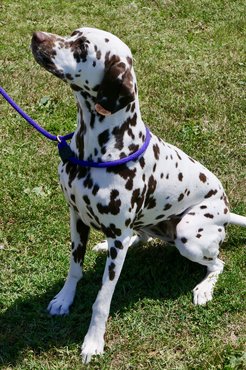
The Dalmatian’s majestic appearance has made them a real favourite with audiences all over the world. Although the official breed description recognises only the black- and the brown-spotted version, you can occasionally meet a tricolour, that is, an individual with black and brown spots at the same time on a white base — but this unfortunately counts as a fault.
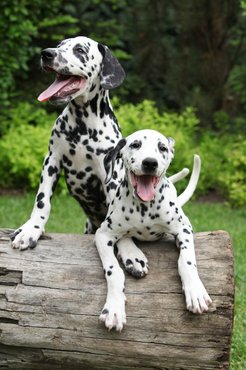
Ideally the exterior coat should be short, hard, dense and shiny, the base colour pure white, on which there are black or brown spots or patches of 2–3 cm in diameter. On the head, the tail and the legs the spots are smaller. A larger patch around the eye or on the body, that is, the “platni”, is an undesirable mark and brings exclusion with it.
The ideal height at the withers for males is 56–61 cm, for females 54–59 cm. The back is strong, straight, the belly tucked up towards the loin. The tail of regular surface should reach approximately to the hock, in a calm state only the last third bends upwards, while walking the dog must hold it in a position higher than the back line.
The nasal bridge is straight, the muzzle elongated but never pointed. The ears are set high, preferably spotted, drooping.
Disqualifying faults are deafness, overly aggressive or shy behaviour, undershot or overshot bite, and crow or blue eyes developing as a result of pigment deficiency. As a curiosity it can be mentioned that males with spotted scrotum are given preference by judges during shows.
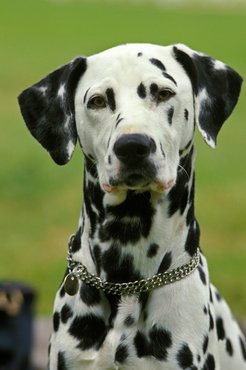
The Dalmatian, as energetic, athletic and intelligent as they are, can also be commanding of respect and in some cases sensitive. From puppyhood they require consistent treatment and a clear set of rules, yet they do not tolerate rudeness and condescending behaviour without reason. If their dignity is offended, they do not forget it easily.
The Dalmatian dog is a true family dog, they love their owner’s company, they love children, in addition they are blessed with a special sense of humour. Their nature is basically extremely kind and gentle, but if they sense indecision from their trainer, they can easily get on their head and take over control.
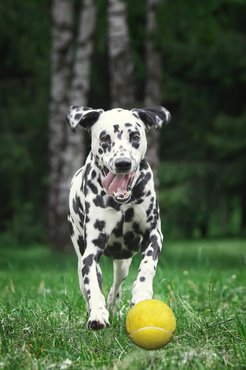
Since they were bred to cover huge distances at the side of horse carriages, daily exercise is indispensable for them. They are an ideal companion for owners who gladly involve them in their sporting activities, for example running, rollerblading or cycling.

As long as regular and active walks are ensured for them, the Dalmatian can even be kept in a flat, but naturally they feel better in a house with a garden, where at any time of the day they can indulge their sport addiction.
If you like hiking, this dog is exactly for you, since they spend the best hours of their life during a nature discovery tour, which moves not only their body, but also their polished mind.
Although short-haired, unfortunately the Dalmatian is not problem-free from the aspect of the exterior coat, they are prone to shedding all year round. So that every piece of furniture and carpet is not full of the small black-and-white hairs, it is worth rubbing over their whole body 1–2 times a week with a rubber brush. If you can do this, you will not have much trouble with the doggie, since thanks to their dirt-repelling coat they remain surprisingly clean even after a generous rolling.
Similar to the Chow Chow, they have no typical dog smell, so they only need bathing when it becomes absolutely necessary.
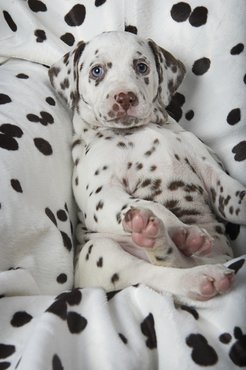
The most frequently occurring genetic weakness in Dalmatians is complete or partial deafness, which can be inherited on every bloodline. Unfortunately, this cannot be completely eliminated in breeding, so experts can only ensure that exclusively parents with proven intact hearing are mated.
Before sale the puppies definitely should undergo a medical hearing test, because home methods, such as clapping or banging two lids together, can produce false results. The dog can sense the vibrations caused by the sound effects, and can react to them, creating in the owner the impression that their hearing works flawlessly.
The other constant health danger is bladder stones. The disturbance of uric acid transport in their liver and kidneys changes the composition of their urine, for this reason the chance of urate-based bladder stones is higher in their case compared to other breeds.
With careful attention, however, this serious disease can be prevented. Always make sure that your Dalmatian has the right amount of clean drinking water available all day, and ensure regular opportunities for urination as well! In addition, keep them on a low-purine diet, that is, they should get little offal and rather white meats! Even better, if you feed them food developed specifically for Dalmatians, because then you do not have to worry that they will suffer a deficiency in one or another nutrient.
Follow us!
facebook instagram youtube spotify
Related articles