American Eskimo Dog: Ideal Favourite Both for a Single Owner and For Families
Published: 2025. 09. 01. 07:30 -
- Photos: Getty Images Hungary • 3 minutes readingPublished: 2025. 09. 01. 07:30 -
- Photos: Getty Images Hungary • 3 minutes reading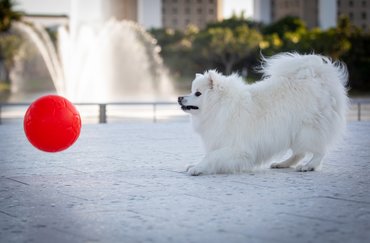
 Set WeloveDogz to appear first in Google search results!
From the name of the American Eskimo Dog, we might suppose Arctic roots, in reality however the breed originates from Germany, and is a member of the Spitz breed group. They arrived in America with German immigrants, where by the end of the 1800s they were already regarded as a popular circus performer.

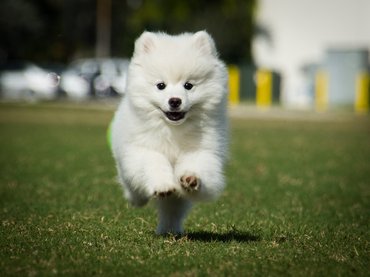
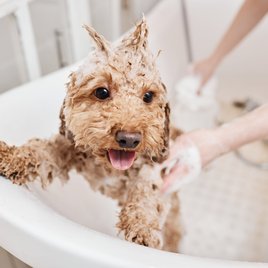
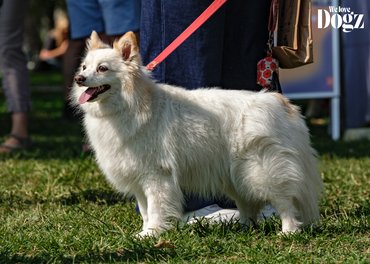
The American Eskimo Dog is an intelligent, lively and friendly breed, who is just as good a choice for a single owner as as a new member of an active family. Characteristically they have snow-white coat, occasionally the slightly cream-coloured shade may also occur. They have the so-called double coat, which means dense, soft undercoat, which protects them from the cold and keeps them warm, while the longer, straight topcoat is thick, slightly coarser to the touch, which gives their characteristic fluffy appearance. Their coat requires regular brushing, because it tangles easily. During shedding they lose much hair. Twice-weekly brushing is enough, despite appearances they do not require extreme grooming.
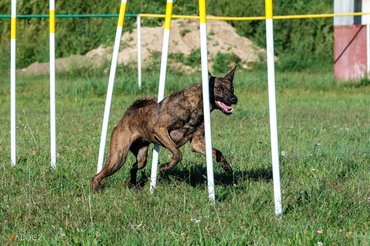
Contrary to their name, their ancestors are not to be sought in the Arctic, but in Germany, where they served for herding and guarding. In the United States German immigrants naturalised them, where the breed already became known as a popular circus performer. They are bred in three sizes: toy (up to about 4.5 kg), miniature (up to about 9 kg) and standard (up to about 16 kg). Despite the different size in each case, it is the same friendly, lively-natured dog. Their circus performer past already foreshadows that they can be trained easily. These playful dogs are best taught with positive reinforcement. Sport, obedience training, agility tasks are entertaining for them, they gladly take part in such tasks.
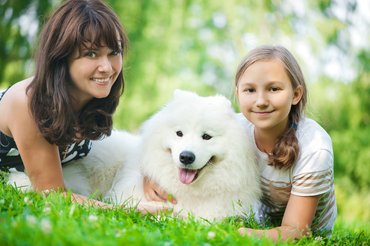
The American Eskimo Dog needs both mental and physical stimulus in order to maintain their interest. Movement, the active lifestyle is important for them. If they do not get tired, they become yappy, or release the tension in the flat. If they are not dealt with, separation anxiety may also be characteristic to develop. It is important for them to be socialised from puppy-hood, many things can already be taught to them when young. They learn quickly. They are friendly, attentive, especially with their owner.
For the Eskimo Dog the incorporation of omega-3 fatty acid into the diet has good effect. These fatty acids function as natural anti-inflammatory, which support their skin, their coat and their joints. Their average lifespan is 13–15 years, they count as a relatively healthy breed, some frequent genetic predispositions may occur: eye problems, hip dysplasia, patella luxation, tooth- and gum-problems. In the case of eye problems characteristic is progressive retinal atrophy (PRA), in which the retina of the eye gradually dies. This disease has no cure, however is not painful. The dogs adapt well to the loss of sight, especially if they live in their safe, familiar environment.
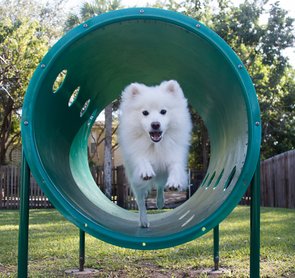
The American Kennel Club only in 1994 recognised the American Eskimo Dog as an independent breed. Nowadays they live their everyday life not as herding dogs, but as companion dogs. Towards strangers sometimes suspicious, however if from puppyhood they were properly dealt with in terms of socialisation, within short time they become friendly. As a result of inconsistent upbringing, they can become a handfull. Because of their thick coat they tolerate the cold excellently, however they endure heat for a longer time more difficultly. They are advised for indoor keeping.
Follow us!
facebook instagram youtube spotify
Related articles